



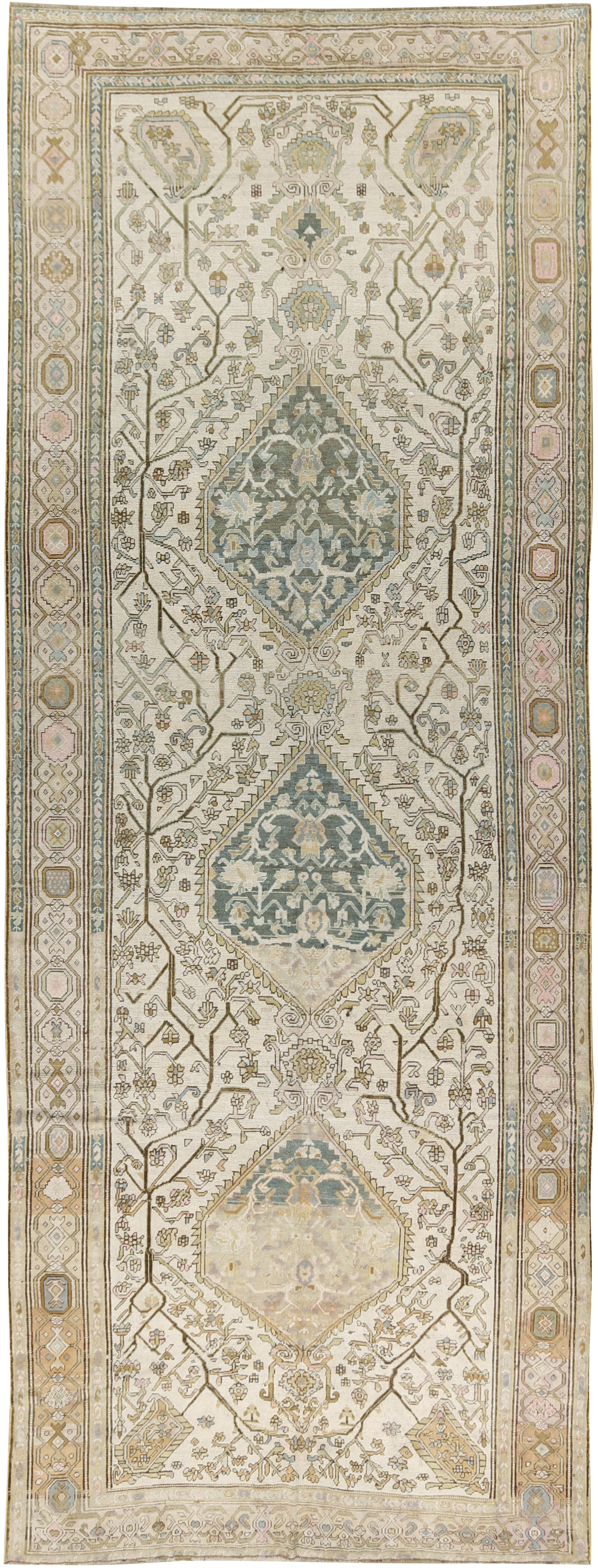

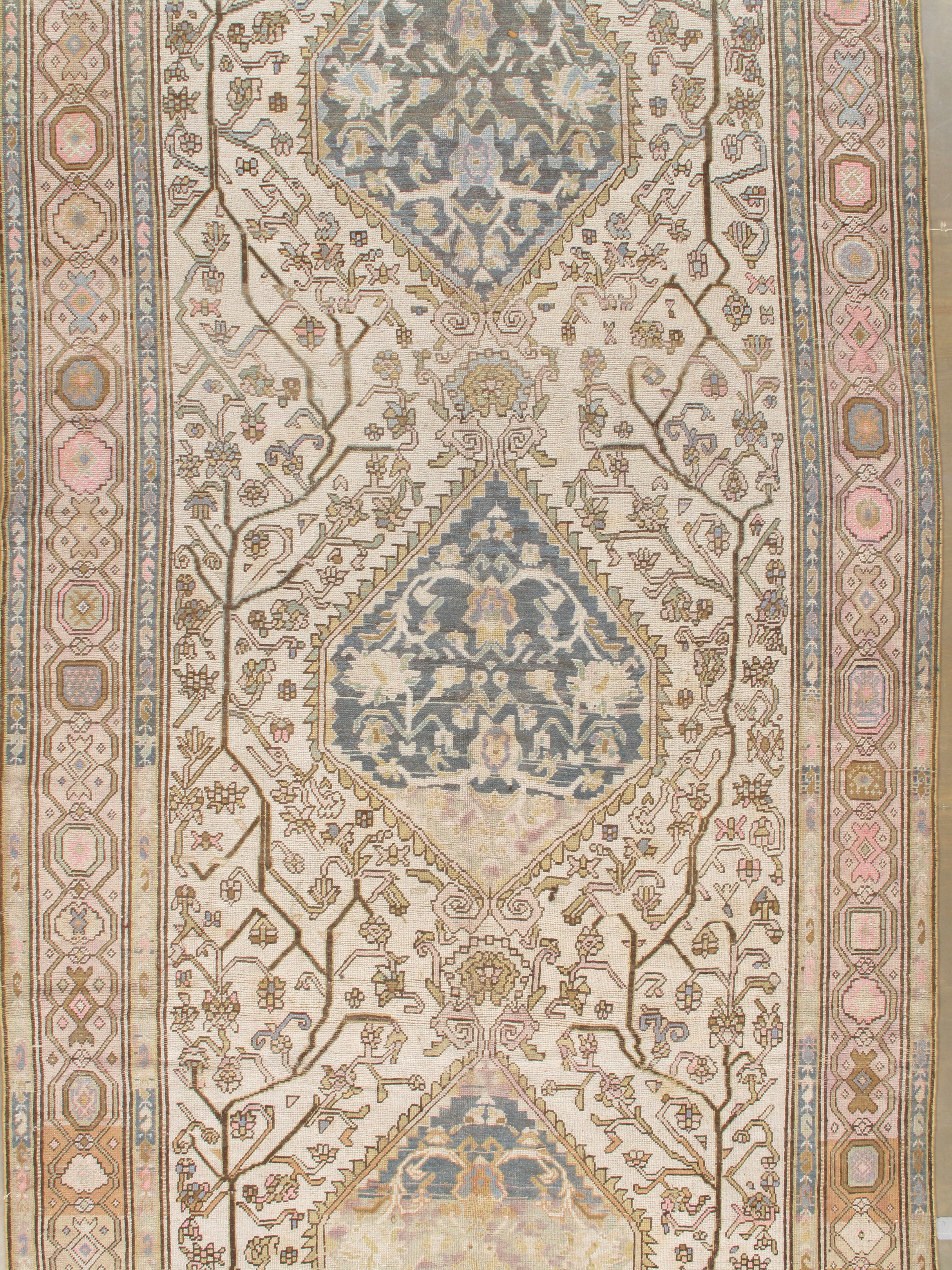
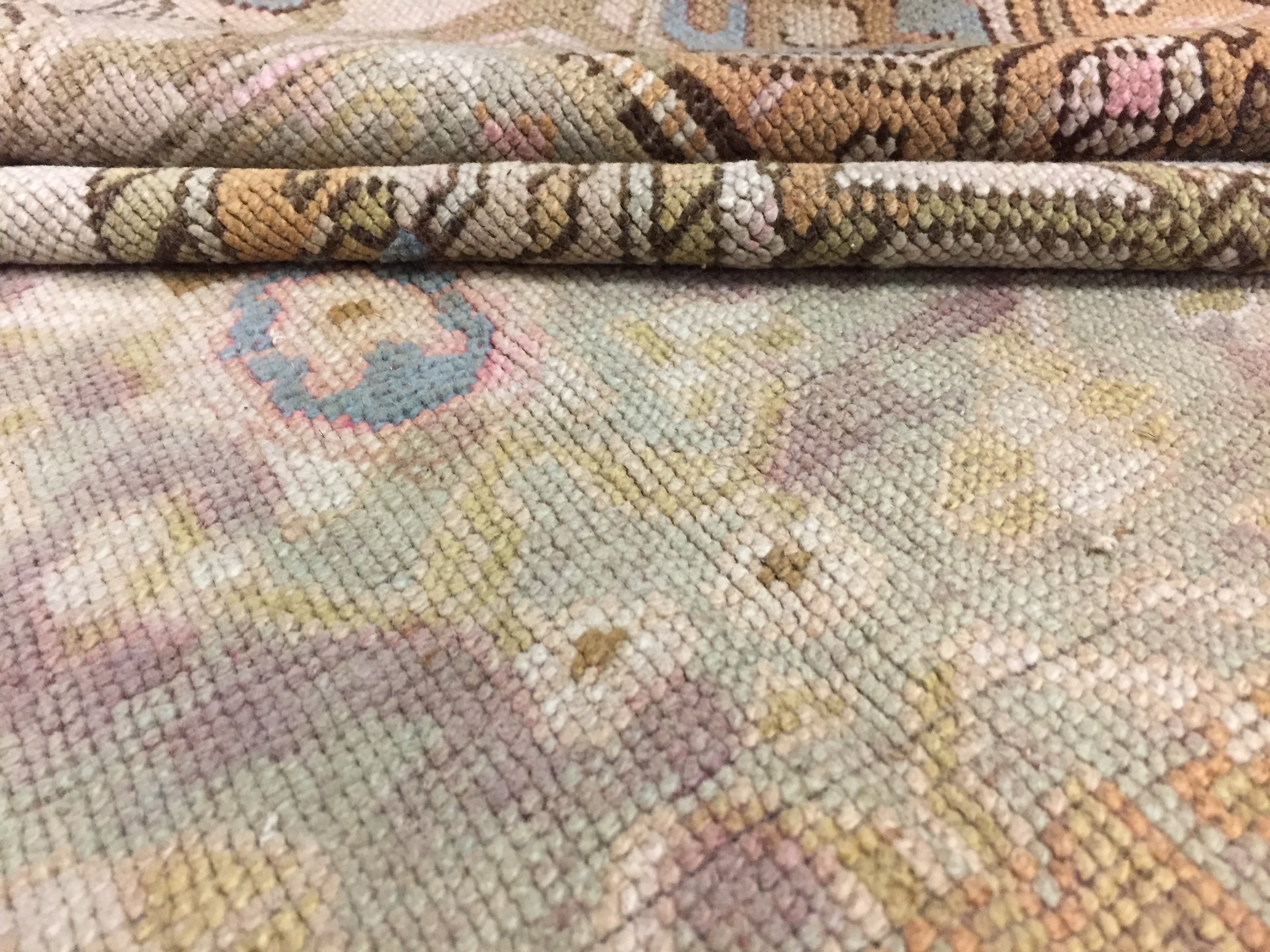
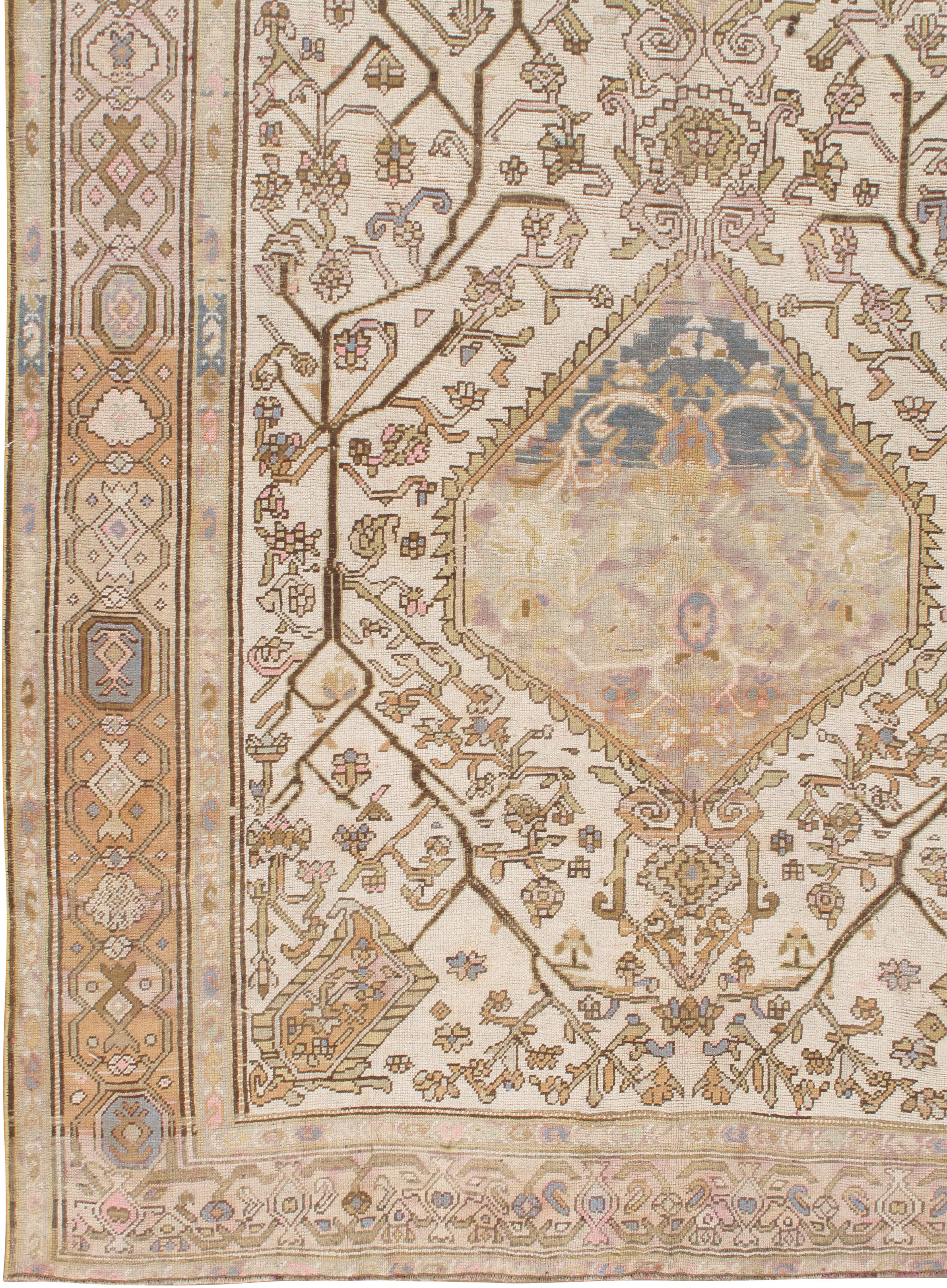
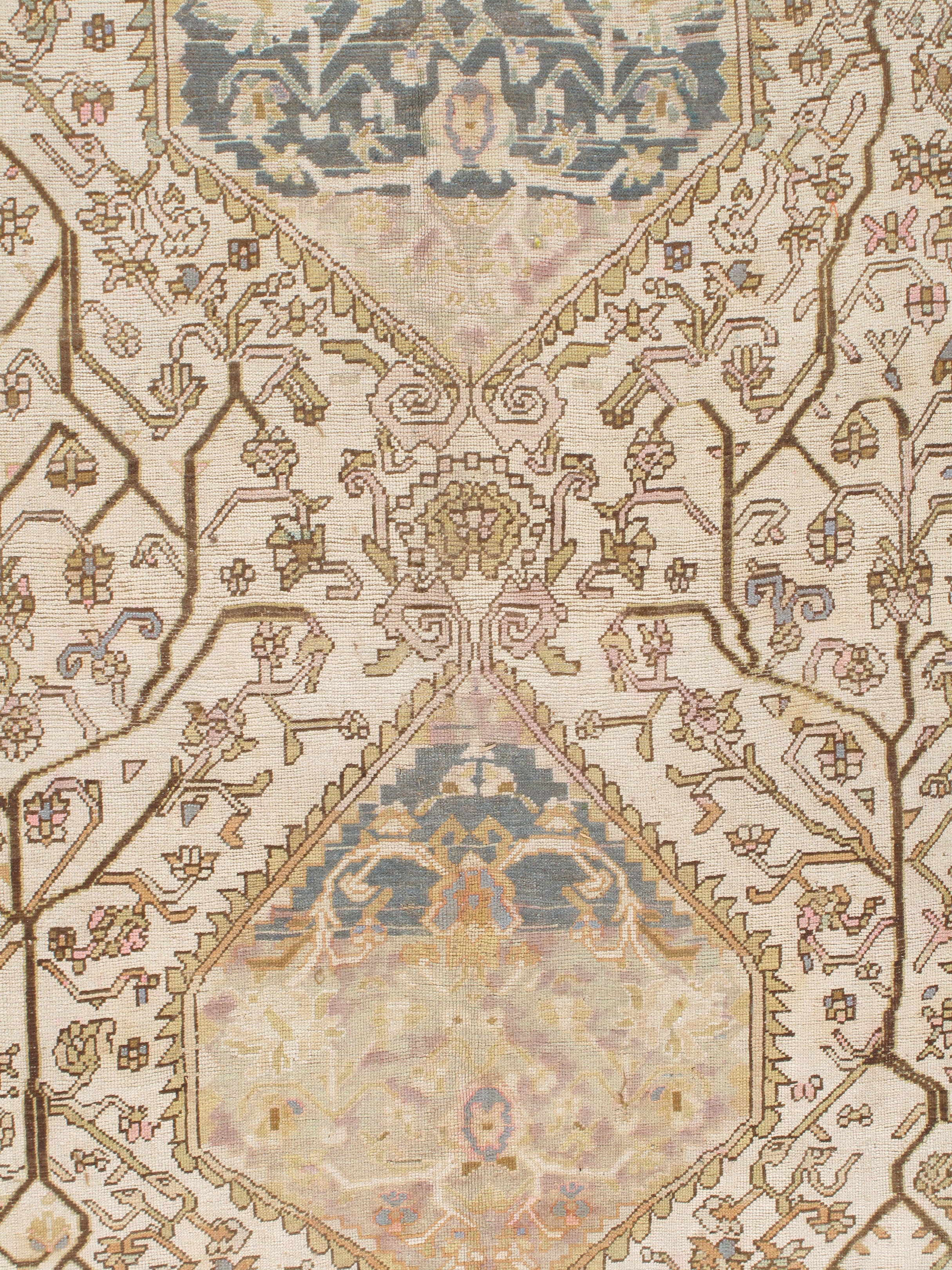
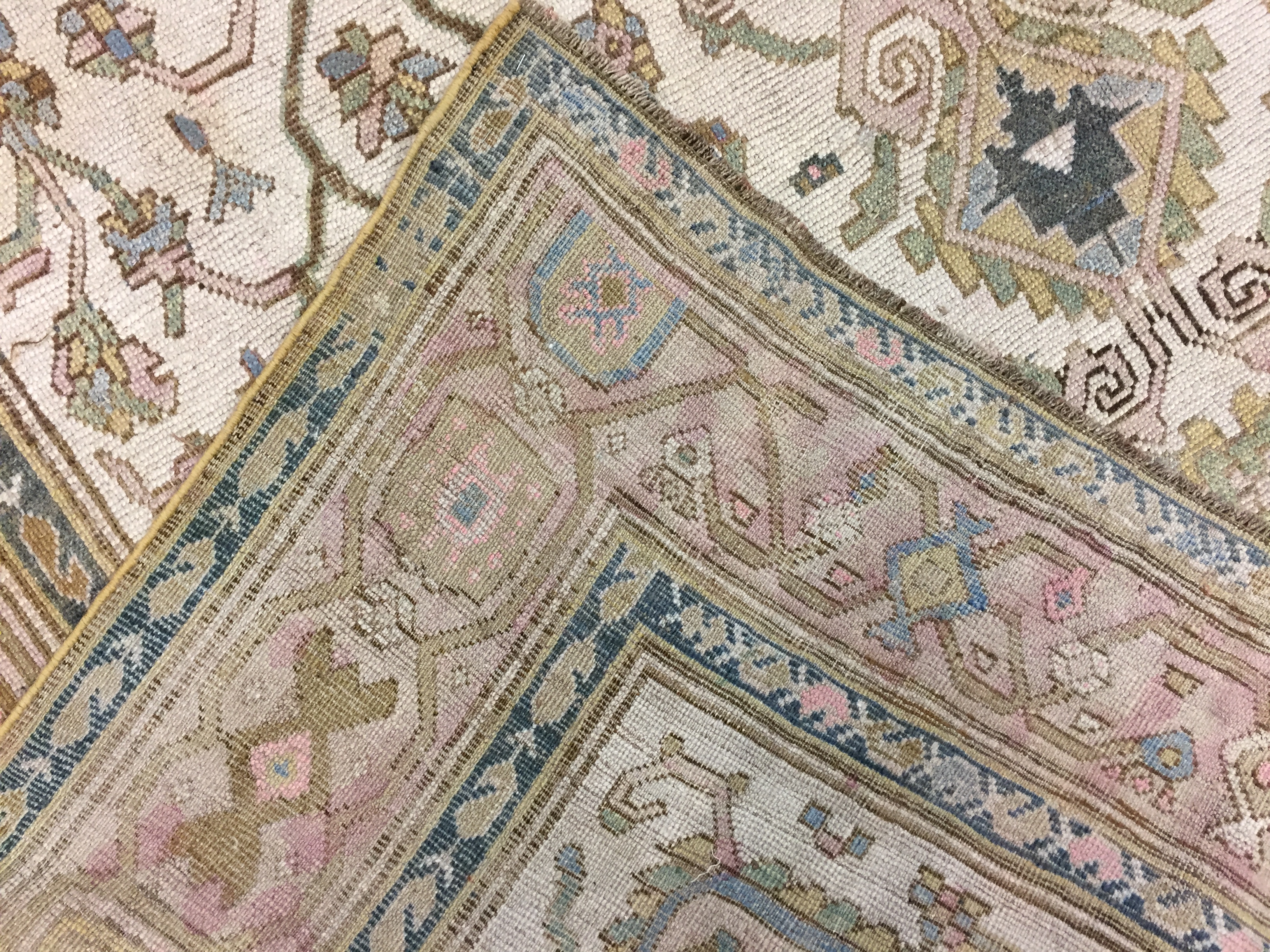
U-3918 - Antique Subdued Karabagh Runner Rug
6ft 06in X 17ft 04in
Circa: 1900
Karabagh Rugs
Across the Aras river from Karajeh is the Armenian Caucasian rug area of Karabagh (Black Garden) which wove scatters, runners and gallery rugs from the 17th century onwards, often with cochineal reds and violets as significant tones. Antique Caucasian rugs from Karabagh may be strongly geometric or decidedly floral in the Persian manner
Across the Aras River, opposite the weaving center of Karajeh in northwestern Persia, lies the historic Caucasian rug-producing region of Karabagh, whose name translates as “Black Garden.” This fertile and culturally rich area of the southern Caucasus has been an important center of carpet weaving for centuries. From at least the 17th century onward, the workshops and village looms of Karabagh produced a wide variety of carpets, including small scatters, elegant runners, and long gallery rugs, many of which were traded widely throughout the region. Karabagh rugs are particularly admired for their rich, vibrant colors, often highlighted by deep cochineal reds and soft violet tones derived from natural dyes. These colors, combined with high-quality wool and lively compositions, give the carpets a distinctive visual presence that has long attracted collectors and designers alike.
In terms of design, antique Caucasian rugs from Karabagh display a fascinating blend of influences. Some examples feature the bold geometric patterns typical of Caucasian weaving, with strong medallions, stylized motifs, and striking contrasts. Others reflect a more floral aesthetic influenced by Persian carpet design, incorporating graceful blossoms, vines, and curvilinear elements that soften the overall composition.This unique combination of Caucasian structure and Persian decorative influence gives Karabagh rugs their distinctive character, making them both historically significant and visually captivating pieces within the rich tradition of Oriental carpets.
Vacuum your rug frequently and use a vacuum which uses suction and does not have bristles. If possible, set vacuum to low power setting and vacuum the rug up and down and do not use a back-and-forth motion.
If possible, rotate the rug every few years to allow foot traffic to be spread evenly and shade the rug from direct sunlight to avoid fading in areas.
A rug pad is recommended on all surfaces to prevent slipping and stop marking if on floors with grooves or lines. Professional cleaning is recommended every two or three years.

